Do Not Run Away From Your Core in the Age of AI and FOMO
In the age of AI, CEOs do not lack opportunities. The problem is that too many opportunities can pull a company away from its core capabilities. This article reframes the question through the Hedgehog Concept: where can AI sharpen your company’s core?
Contents
Many companies do not die because they lack opportunities.
They die because they want to chase every opportunity.
That sounds harsh. But the more I work with CEOs, the more true it feels. Especially in the age of AI.
In the past, testing a new idea cost money, people, and time. Now it is different. A landing page can be built in a few hours. A content campaign can be drafted in one session. A prototype can be produced much faster than before. Even an AI feature that feels “on trend” is no longer that hard to try.
The problem is this: being able to do something faster does not mean you should do it.
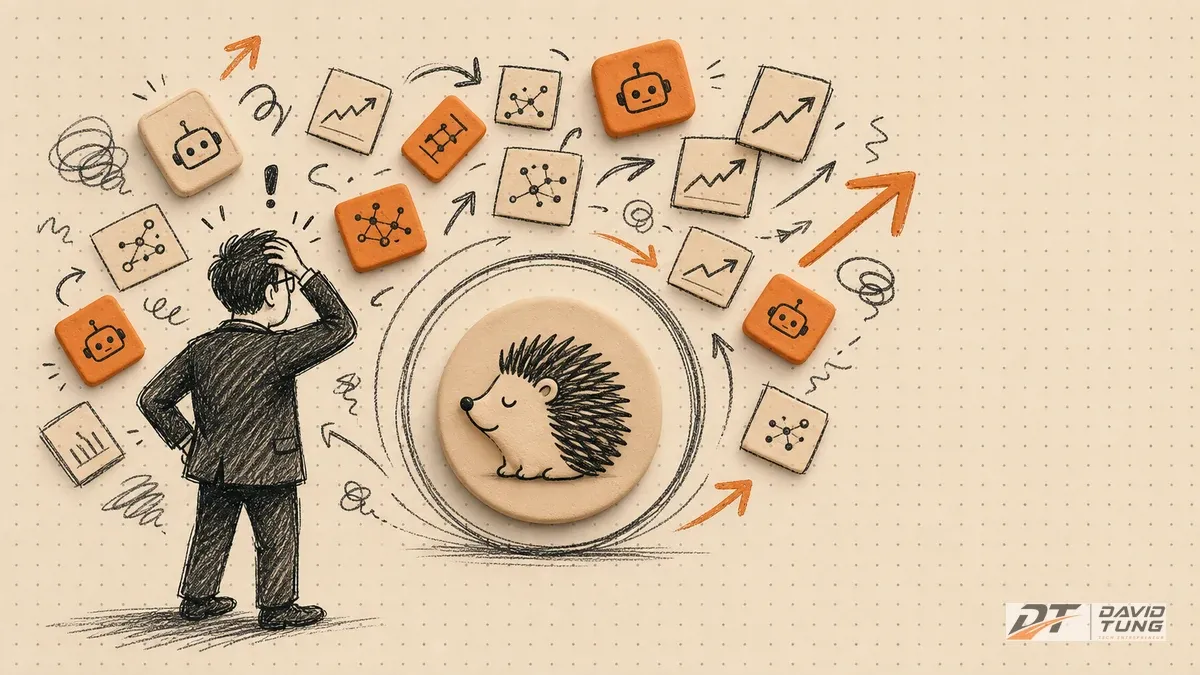
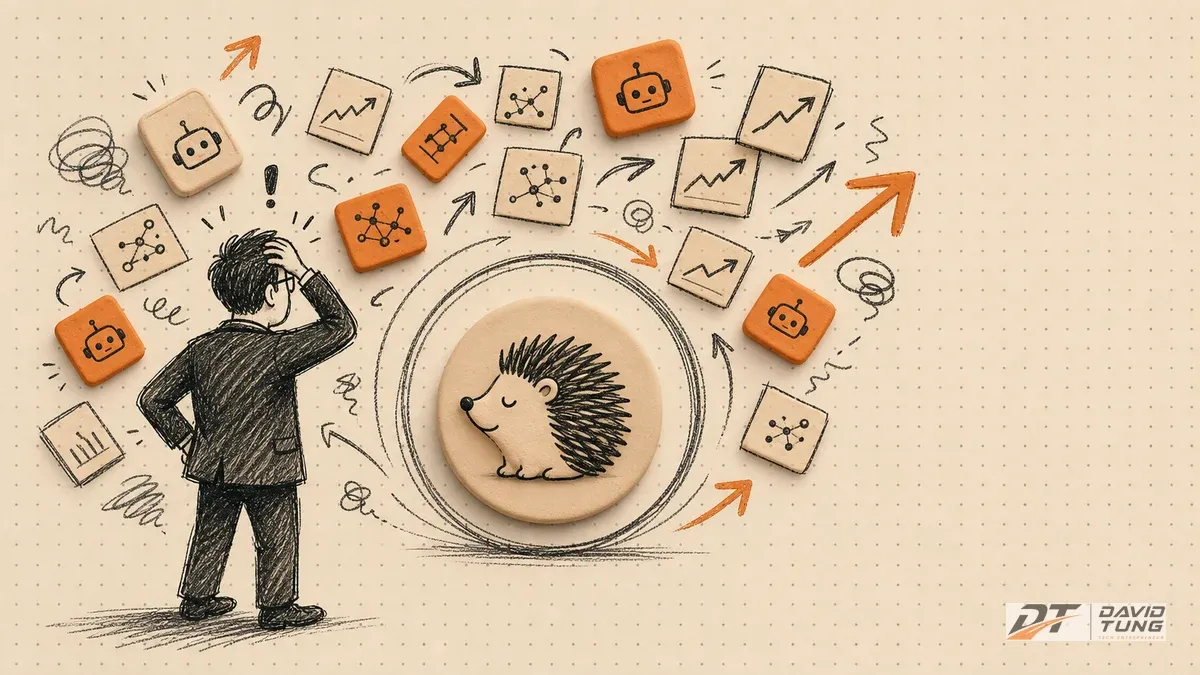
AI lowers the cost of experimentation. But it also increases strategic FOMO. Everywhere the CEO looks, there is another opportunity: a new product, a new market, a new channel, a new AI feature, a new automation, a new content format, a new partnership.
And then the company starts running.
Faster. But not necessarily in the right direction.
AI cannot fix an unfocused strategy
One of the most common misunderstandings about AI is this: because AI helps companies do more things faster, the company should do more things.
It sounds reasonable. But it is dangerous.
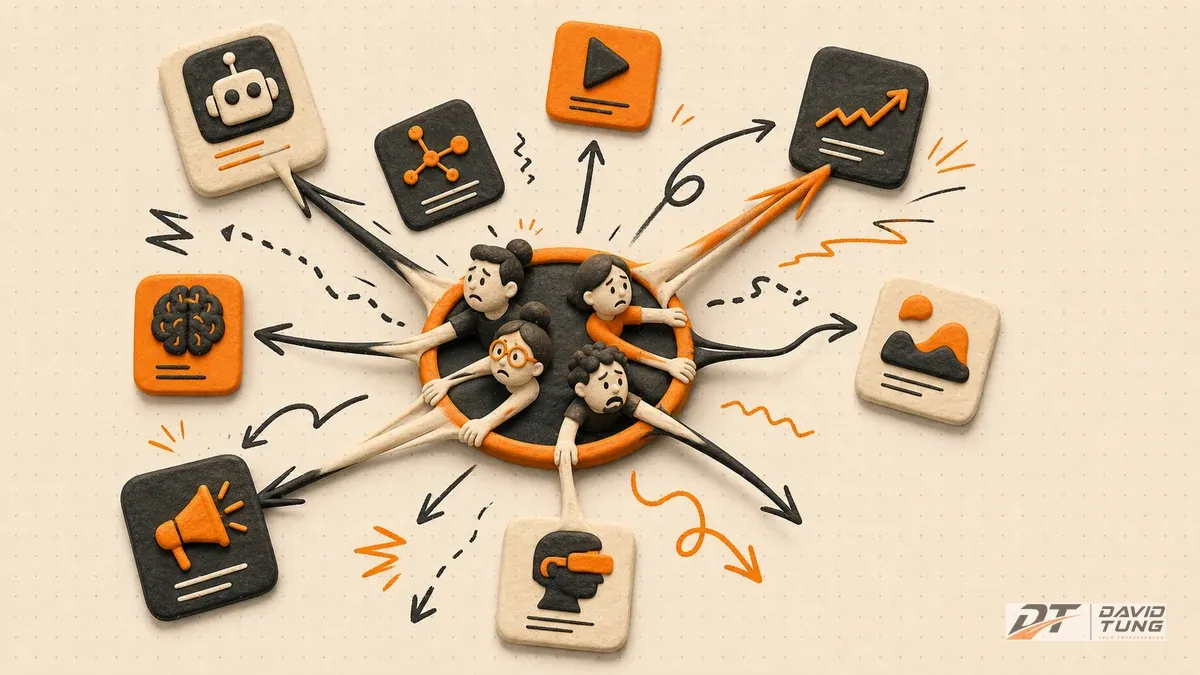
If a company already has a strong core, AI can sharpen that core. But if a company is already scattered, AI only helps that scattering happen faster, at larger scale, and with a more “modern” appearance.
A marketing team that has not clarified its core message will use AI to produce more content, but that content will not necessarily become more powerful.
A sales team that does not know its best customer segment will use AI to send more emails, but the win rate will not necessarily improve.
A company that does not know which product creates real margin will use AI to imagine more features, more packages, more channels, more markets. From the outside, it looks busy. Inside, the core gets thinner.
This is the trap of the AI era:
We can do it faster
→ so we think we should do it
→ we open more directions
→ the team gets busier
→ the company does not get stronger
So the CEO’s question should not be:
“What else can AI help us do?”
The better question is:
“Where can AI make our core capability sharper?”
Return to the Hedgehog Concept: simple, but not easy
In Good to Great, Jim Collins talks about the “Hedgehog Concept.”
The idea is simple. A company that wants to go from good to great needs to find the intersection of three questions:
- What can we be the best at?
- What truly drives our economic engine?
- What gives the team long-term energy and passion?
That intersection is the company’s “hedgehog.”
It is not what the company likes most on a strategy slide. It is not the loudest trend in the market. It is not the opportunity a customer happened to ask for last week. It is also not the thing a competitor just launched that makes the CEO nervous.
It is the zone where the company can stay long enough, compound deeply enough, and get stronger the more it works.
This is where many CEOs get it wrong.
They think strategy means finding more growth opportunities. But often, strategy means being clear enough to reject the opportunities that pull the company away from its core.
New opportunities are not bad. But every opportunity has a hidden cost. It consumes the CEO’s attention. It pulls the team away from what they already do well. It expands the roadmap. It makes customers less clear about what the company is truly good at.
And the worst part: it creates the feeling that the company is moving forward, while in reality it is just moving sideways.

Five examples: companies get stronger when they return to the core
To avoid staying too theoretical, let’s look at a few examples.
Apple: cut to become clear

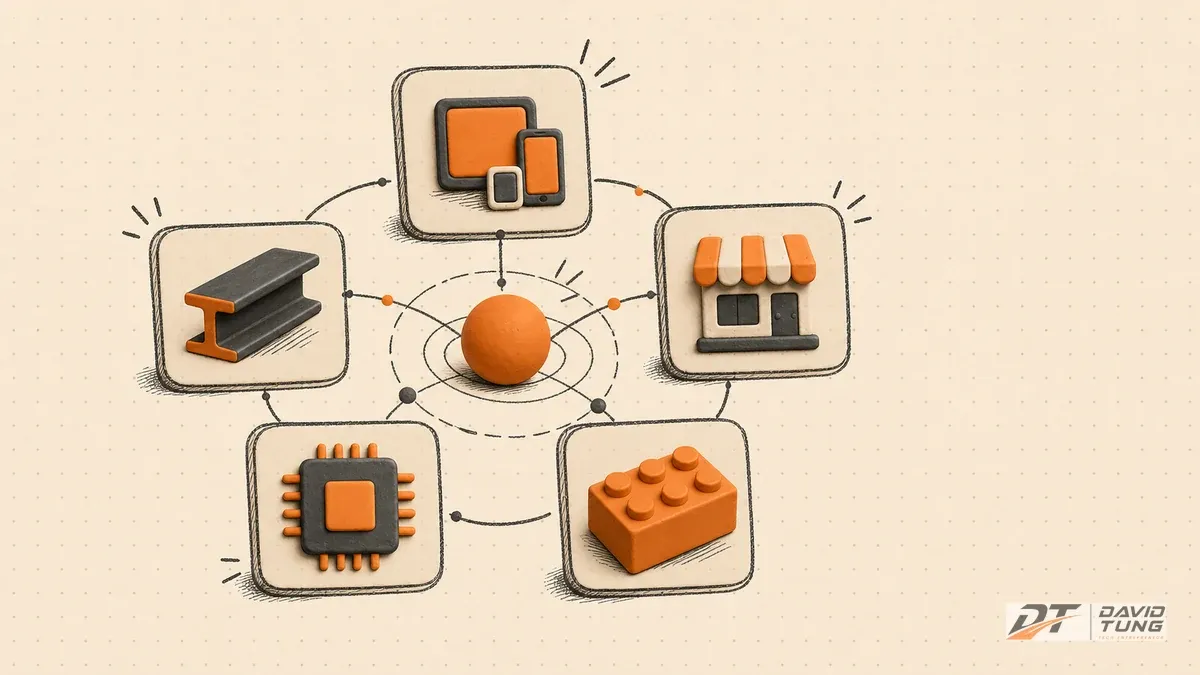
When Steve Jobs returned to Apple in 1997, Apple did not lack products. In fact, it had too many overlapping product lines: multiple Mac variations, Newton, printers, accessories, and scattered projects.
Customers were confused. The internal team was confused too.
Jobs did something that is very hard for any organization: he cut.
He brought the portfolio back to a simple 2×2 matrix: consumer/pro and desktop/portable. From too many directions, Apple returned to a clearer core: fewer products, but deeper, better, and easier to understand.
The lesson is not that every company should copy Apple. The lesson is this: sometimes growth begins by stopping the work that makes the company blurry.
Nucor: the core is operational discipline
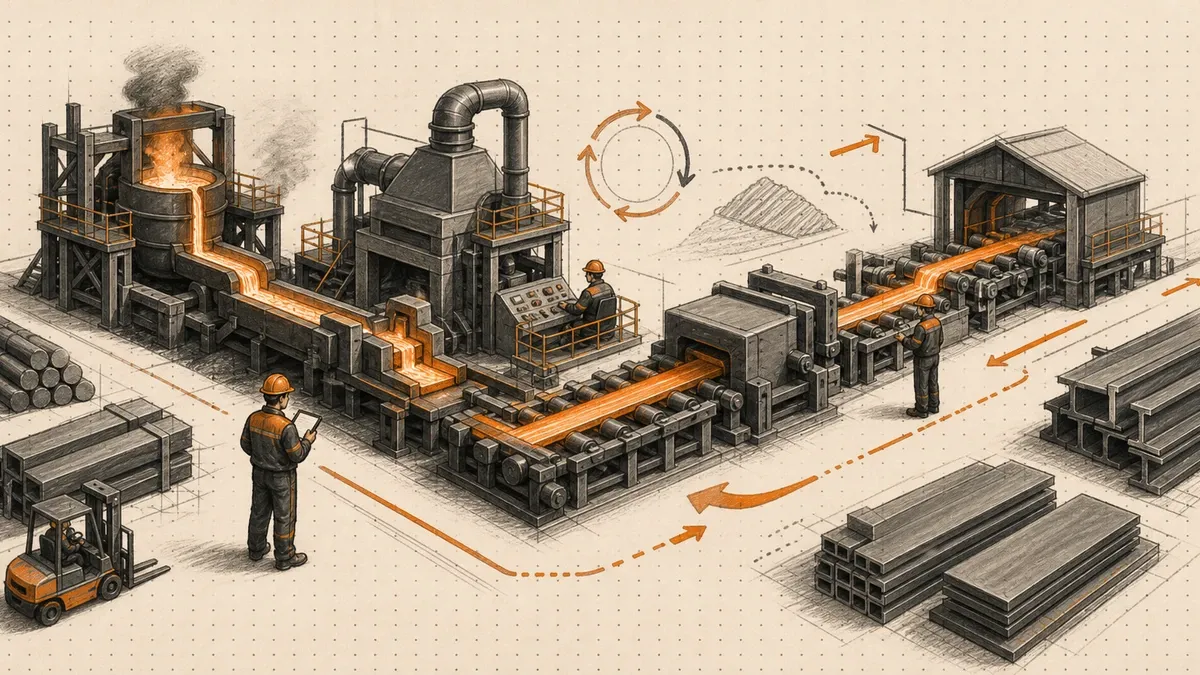
Nucor is one of the cases in Good to Great. It did not become great by chasing every new industrial category. It built its advantage around efficient steel production, operating discipline, a lean plant model, and a strong productivity culture.
Put simply: it knew what it could win with.
When a company understands where its “economic engine” really sits, it becomes harder for every revenue opportunity to drag it away. It asks: does this improve our economic core? If not, even if it sounds attractive, it may still be noise.
Walgreens: the core is convenience that can scale

Walgreens is also a well-known case in Good to Great. Instead of trying to become every kind of retailer, it focused on the convenient drugstore model: good locations, easy access, easy purchasing, and strong economics per customer visit.
The lesson is simplicity.
Not every model that sounds big is strong. Some companies win because they understand a small economic engine that repeats extremely well. Once they understand that engine, every expansion decision must serve it.
NVIDIA: AI amplifies the core, it does not replace it

NVIDIA is a very timely example.
At the surface level, people may say NVIDIA “got lucky” because AI exploded. But looked at more deeply, AI did not turn NVIDIA into a different company. AI amplified the core capabilities it had built over many years: GPUs, accelerated computing, and a hardware/software ecosystem for parallel computation.
This is an important lesson for CEOs in the AI era.
AI does not necessarily have to become a new direction. For a company with a clear core, AI can become the catalyst that makes that core much stronger.
LEGO: return to the core system of play

LEGO had a period when it expanded too broadly: theme parks, games, clothing, and many different entertainment directions. Some of those moves created visibility, but there were also periods when they made the company more scattered.
LEGO’s recovery was tied to returning to its core: bricks, creativity, play experiences that can expand through themes, IP, community, and digital — but still revolve around the “system of play.”
The interesting point is that LEGO did not reject innovation. It still uses IP, movies, games, and digital experiences. But those moves work better when they orbit the core, not when they replace it.
The CEO question: does this make the core sharper?
In the age of AI and FOMO, I think CEOs should add one question to every strategy meeting:
Does this make our core sharper?
Before opening a new product, a new channel, a new market, or a new AI feature, ask five more questions:
- Does this make the company’s core capability stronger?
- Does this improve the real economic engine?
- Does this give the team more long-term energy?
- If we skip this opportunity, do we lose a strategic advantage?
- If we take this opportunity, what do we have to sacrifice?
Question five is usually the one people avoid.
Because new opportunities are almost always presented through their attractive side: new revenue, new customer segment, new feature, new market. But people rarely describe the other side clearly enough: which team will be pulled away, which roadmap will slow down, which core quality will get thinner, which customers will be served worse.
A good CEO does not only ask, “Is this opportunity interesting?”
A good CEO asks: “Is this opportunity worth the distraction it creates?”
AI should sharpen the core, not open a new maze
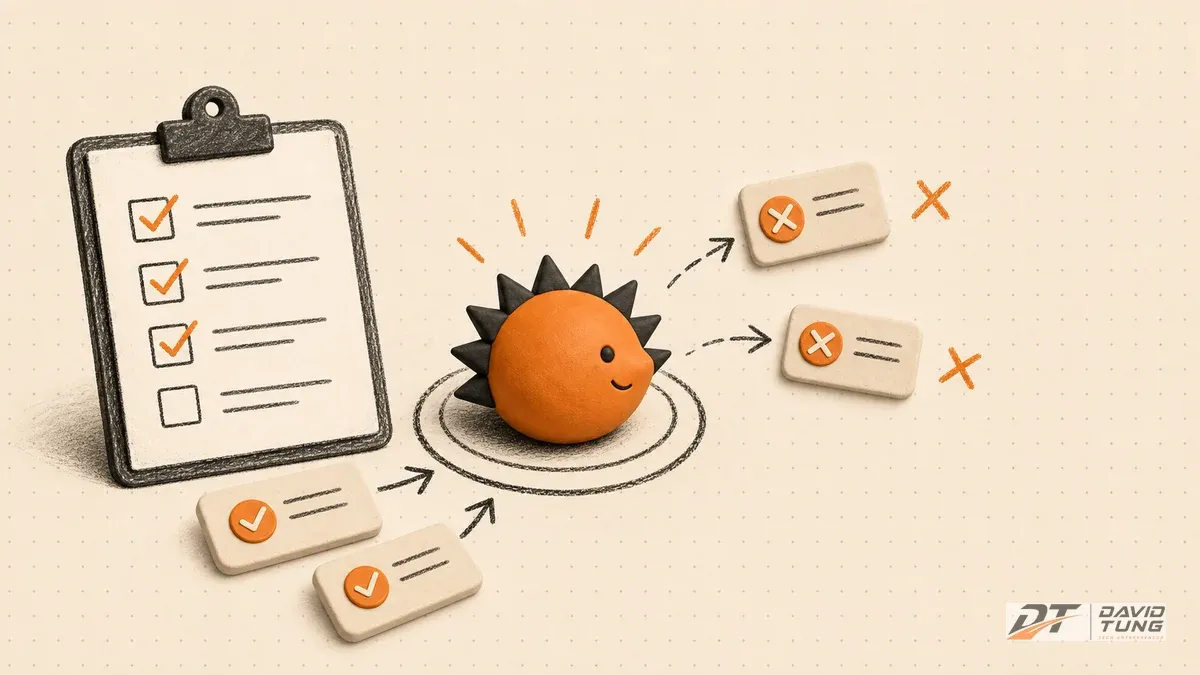
If the company knows its core, AI becomes extremely powerful.
Not because AI can do everything. But because AI helps the company do the important things faster, more consistently, and learn from every correct run.
For example:
If the company’s core is deep content production, AI should not only write captions. It should help with research, scripts, visual direction, voice, subtitle sync, video rendering, QA, and turning a good workflow into a repeatable process.
If the company’s core is consultative selling, AI should not only write emails. It should read customer history, standardize needs, create proposals, generate DOCX/PDF quotations, create payment QR codes, suggest follow-ups, and reduce the time from need to proposal.
If the company’s core is deployment and operations, AI should not only answer server error questions. It should read logs, suggest inspection commands, write checklists, create restore docs, and save the resolution process so the team does not have to rediscover it next time.
Same AI. Completely different operating level.
The low level is: AI answers individuals.
The higher level is: AI sharpens the organization’s core capability.
A company that does not know its core will use AI like a tool marketplace. Every department tries a little. Every person prompts differently. Every week brings a new tool. It looks energetic, but the organization does not accumulate much.
A company that knows its core asks a different question:
Which capability, if amplified 10x by AI,
would make the company clearly stronger?
That is a question worth sitting with for 30 minutes.
A 30-minute exercise: find your company’s hedgehog
If you want to do this quickly, open a simple table with five columns:
| What the company is doing | Does it create real money? | Are we better than the market at it? | Does it compound advantage over time? | Is it just FOMO? |
|---|---|---|---|---|
| Product / service A | ||||
| Sales channel B | ||||
| AI feature C | ||||
| Market D | ||||
| Internal project E |
Do not make this too “workshop-like.” Be direct.
Some things are generating revenue but not building advantage. Some things energize the team but customers do not pay enough for them. Some things sound very fashionable but pull the company further away from its strengths the more you do them.
Then ask:
If we could use AI to make only one company capability 10 times sharper, which capability would we choose?
The first answer may not be right. But it opens a much more valuable conversation than: “Which AI tool should we try this week?”
Do not run away from the core. Sharpen it.
Business sometimes does not need one more direction.
It only needs enough discipline not to leave the right one.
The noisier the AI era becomes, the calmer CEOs need to be. New things will always be attractive. New opportunities will always sound reasonable. New tools will always promise that the company can move faster.
But faster toward what?
If that direction pulls the company away from its core capability, speed only spreads the mistake faster.
The Hedgehog Concept does not tell a company to stand still. It reminds CEOs that sustainable growth often comes from a core that is sharpened continuously — not from chasing everything that looks new.
AI does not replace core capability.
AI amplifies the companies that know their core capability clearly.
And perhaps the most important CEO question right now is not:
“What will we use AI for?”
It is:
“Where will AI make our hedgehog sharper?”